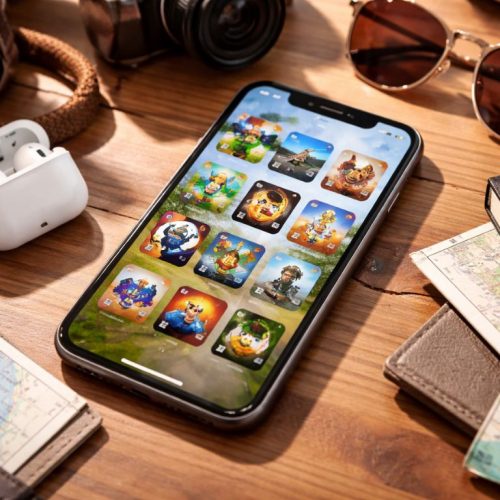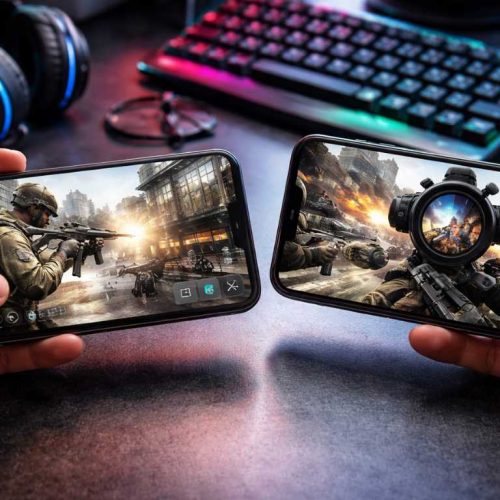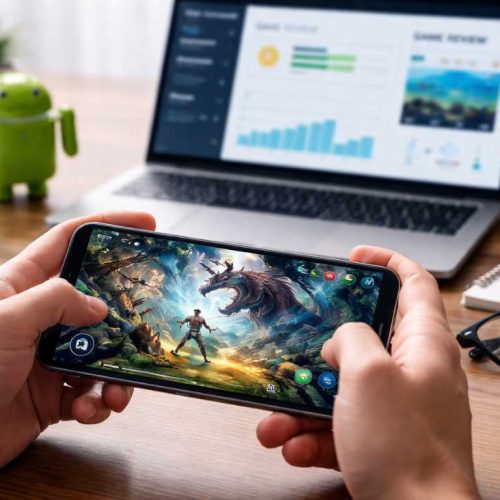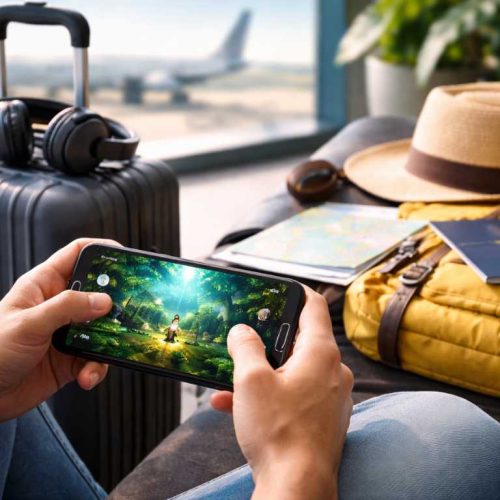
The thrill of a new destination is often separated from the traveler by long hours of transit—moments where the world outside the window remains static and the digital world becomes our primary escape. Whether you are navigating a transatlantic flight or a cross-country train ride, reliable entertainment is essential. However, high-fidelity gaming often comes at the cost of battery life and a requirement for constant connectivity. This is where this Low-End Games for Travel Guide becomes your most valuable resource. These titles are designed to run smoothly on modest hardware, offering deep and engaging experiences without the technical hurdles of modern blockbusters. In this extensive guide, we will explore why these games are the superior choice for the modern nomad and how you can optimize your setup for maximum enjoyment.
The concept of low-end gaming has evolved significantly over the last decade. It no longer implies a compromise in quality or depth. Instead, it refers to architectural efficiency. A well-designed game can provide hundreds of hours of entertainment while consuming a fraction of the processing power required by a triple-A title. This efficiency is the cornerstone of travel gaming. When you are 30,000 feet in the air or tucked into a sleeper car on a rail line, the last thing you want is a device that overheats or a battery that drains in less than an hour. By focusing on low-spec titles, you ensure that your journey is filled with adventure, regardless of the hardware you carry in your backpack.
Why Offline Low-End Games Are Travel Essentials
When traveling, consistent internet access is a luxury rather than a guarantee. Public Wi-Fi in terminals can be unreliable or insecure, and mobile data is often expensive or unavailable in remote areas. Using offline low-end software is an indispensable part of a traveler’s toolkit because these games remove these barriers entirely. They are built to function in isolation, ensuring your entertainment is never interrupted by a dropped signal or a login screen that refuses to load. Furthermore, because these games are less demanding on a device’s processor, they significantly extend battery life—a crucial advantage when you are far from the nearest charging station.
- Battery Efficiency: Low-spec games require less power from the GPU and CPU, allowing your device to last through the duration of a long-haul flight without needing a power bank.
- Independence from Connectivity: Enjoy seamless gameplay on airplanes, in tunnels, or in remote regions without cellular service, avoiding the frustration of “always-online” DRM.
- Universal Compatibility: These titles perform reliably on older smartphones, budget tablets, and lightweight ultraportable laptops alike.
- Storage Preservation: Smaller file sizes leave more room on your device for travel photos, maps, and essential travel documents.
- Thermal Management: Low-end games generate less heat, making them more comfortable to play on your lap or in handheld mode during warm commutes.
Beyond the technical benefits, there is a psychological advantage to these types of travel games. Traveling can be stressful, involving tight schedules and crowded spaces. Low-end games often feature stylized art, calming soundtracks, and gameplay loops that encourage flow states. This can be significantly more relaxing than the high-stress, competitive environments found in many modern online shooters. Whether it is a pixel-art farming simulator or a minimalist puzzle game, the aesthetic simplicity often translates to a more peaceful travel experience.
The Appeal of Simplicity and Strategy
The strength of low-end travel games often lies in their focus on core mechanics rather than visual spectacle. By moving away from resource-heavy graphics, developers can prioritize puzzles, narrative depth, and strategic complexity. This ensures that the player remains captivated by the quality of the challenge itself. From intricate logic puzzles to immersive turn-based strategy games, these experiences prove that profound entertainment does not require a high-end graphics engine to be effective and memorable.
Consider the genre of “Roguelike” games. These titles often use 2D graphics or simple 3D models but offer infinite replayability through procedurally generated levels. For a traveler, this is the gold standard. You can play the same game for the entirety of a trip from London to Tokyo and never see the same level twice. The depth of strategy required to master these games provides the mental stimulation needed to make a twelve-hour flight feel like three. Similarly, management sims allow you to build and oversee complex systems—cities, theme parks, or space stations—all within the constraints of low-spec hardware requirements.
The Best Tips for Discovering and Enjoying Travel Games
Selecting the right games for your journey involves more than a quick visit to an app store. To ensure a smooth experience, it is important to look for titles with high replayability and a balance between challenge and relaxation. Before departing, always verify that your chosen games actually function without a data connection. One of the best tips for any digital nomad is to curate a diverse library before you even leave your house.
- Research and Reviews: Seek out titles specifically praised for their offline depth and performance on modest hardware. Look for “Potato PC” or “Legacy Device” compatibility lists.
- Pre-Trip Testing: Open the game at home while your device is in airplane mode to confirm it functions correctly without a signal. Some games require a one-time activation that must be done while connected to the internet.
- Genre Variety: Maintaining a mix of puzzle games, card-based adventures, and classic arcade titles will keep your options fresh during a long trip. You don’t want to get “burned out” on a single mechanic.
- Controller Compatibility: If you are using a tablet or phone, check if the game supports a Bluetooth controller. This can make the experience much more ergonomic during long sessions.
- Update Management: Disable auto-updates for your games once you are on the move. There is nothing worse than a game refusing to launch because it wants a 2GB patch while you are on limited roaming data.
Another crucial element of the best tips for travel gaming involves physical comfort. If you are playing on a laptop, ensure you have a surface that allows for proper ventilation. If you are on a smartphone, consider a lightweight stand or a case with a built-in kickstand. Gaming for hours in a cramped economy seat can lead to neck strain, so frequent breaks and ergonomic adjustments are just as important as the games themselves. Remember, the goal of this Low-End Games for Travel Guide is to enhance your journey, not cause physical discomfort.
Hardware Optimization for the Low-End Traveler
To get the most out of your travel games, your hardware needs to be as ready as your software. Even if you are using a high-end laptop, running it in a “low-power” or “battery saver” mode will often force the system to behave like a low-end machine, which is perfect for the games we are discussing. This strategy effectively doubles or triples your playtime. You should also lower your screen brightness to the lowest comfortable level, as the display is often the largest consumer of battery life after the processor.
Furthermore, consider your storage management. While low-end games are small, having dozens of them can eventually clutter your drive. Use a dedicated folder or a launcher that works offline to organize your titles. Clean your laptop’s fans and remove unnecessary background processes to boost performance, even in basic offline low-end games. Every bit of saved processing power translates directly into more minutes of gameplay.
Exploring Different Genres for Long Journeys
In this Low-End Games for Travel Guide, we categorize games by how they occupy your time and mental energy. Different phases of travel require different types of engagement. For instance, the chaotic environment of a busy airport terminal might call for a simple, “pick-up-and-play” arcade game that doesn’t require deep concentration. Once you settle into a long-haul flight and put on noise-canceling headphones, you may prefer a narrative-driven RPG or a complex strategy game.
Turn-Based Strategy and Tactics: These are the kings of low-end travel. Because they don’t rely on fast reflexes, they are unaffected by the slight lag or stutter that might occur on very old hardware. They also allow you to look away—to check your gate number or talk to a flight attendant—without pausing the game. The depth of these titles often rivals that of the most expensive console games.
Deck-Building Roguelikes: These have exploded in popularity recently and for good reason. They are almost exclusively 2D, meaning they run on practically anything. They offer a perfect blend of luck and skill, making each “run” feel unique. The “one more turn” nature of these games is a fantastic way to pass several hours without realizing it.
Classic Emulation: For those who enjoy nostalgia, emulation is a powerful tool. Older console games were designed for hardware much weaker than a modern toaster. You can carry thousands of classic titles from the 80s and 90s on a single SD card. This provides an almost infinite library of travel games that are guaranteed to be offline low-end compatible.
Frequently Asked Questions
What are low-end games?
Low-end games are titles optimized to run on hardware with limited processing power. They utilize fewer system resources and simpler graphics, making them ideal for mobile devices, older laptops, or modern “ultrabooks” where power efficiency is a priority over raw graphical output.
Do all low-end games work offline?
While many low-end games are designed for offline play, it is not a universal feature. Some developers include mandatory online check-ins, cloud-save requirements, or “live service” elements. It is always best to check the game description for offline capabilities and test the game manually in airplane mode before you leave on your trip.
How do I find games with low system requirements?
Most digital storefronts like Steam or GOG allow you to filter by system requirements. Look for games that require less than 4GB of RAM and have “integrated graphics” listed under the GPU requirements. Additionally, searching for “indie” titles is a great way to find low-spec gems, as independent developers often work within tighter technical constraints than large studios.
Can I play low-end games on a smartphone?
Absolutely. The mobile market is the primary home for low-end gaming. However, be wary of “free-to-play” mobile games, as they often require a constant internet connection for ads and in-app purchases. Look for “premium” or “paid” titles, as these are much more likely to offer a robust offline low-end experience.
The Cultural Impact of Low-Spec Gaming
There is a growing movement in the gaming community that celebrates “low-fidelity” aesthetics. This isn’t just about saving battery; it’s an artistic choice. Pixel art, low-poly 3D models, and stylized vector graphics have a timeless quality that high-end “realistic” graphics lack. When you follow this Low-End Games for Travel Guide, you aren’t just settling for less; you are engaging with a vibrant art form that values style over raw power. This movement has allowed smaller creators from all over the world to share their stories without needing multi-million dollar budgets. As a traveler, you get to carry these unique, diverse stories with you, making your digital experience as culturally rich as your physical one.
Additionally, low-end gaming is more inclusive. Not everyone can afford a $2,000 gaming laptop. By supporting and playing low-spec games, you are part of a community that prioritizes accessibility. Whether you are a budget-conscious student or a professional traveler with a thin work laptop, low-end gaming ensures that no one is left behind. This democratic approach to entertainment fits perfectly with the spirit of travel, which is about breaking down barriers and exploring new horizons regardless of your background or equipment.
Final Preparation Checklist for the Digital Traveler
Before you zip up your carry-on, run through this final checklist to ensure your gaming experience is flawless. Preparation is the difference between a relaxing trip and a frustrating one. Use the best tips gathered here to solidify your plan.
- Download Everything: Ensure all game files, DLC, and necessary launchers are fully downloaded and updated.
- Charge Every Device: Start your journey with 100% battery on all devices, including your wireless headphones and controllers.
- Organize Cables: Keep your charging cables and a high-capacity power bank in an easy-to-reach pocket.
- Screen Protector: If you are using a handheld device or tablet, a matte screen protector can reduce glare from airplane windows or bright train stations.
- Backup Saves: If the game allows it, make a local backup of your save files. Cloud saves are great, but they won’t help you if you lose progress while offline.
By taking these steps, you turn your device into a powerhouse of entertainment that defies the limitations of your environment. You no longer rely on the airline’s outdated movie selection or spotty train Wi-Fi. You are the master of your own digital domain, equipped with the knowledge and the library to make every mile of your journey enjoyable.
Conclusion
Packing for an adventure involves more than choosing the right clothes. It also means preparing for long waits and travel downtime. By selecting games from this Low-End Games for Travel Guide, you can turn idle moments into relaxation and mental stimulation. These titles balance accessibility and engagement, so you always have quality entertainment within reach.
Focusing on efficiency and offline performance keeps your attention where it belongs—on the journey. Whether you explore a digital dungeon or walk through a new city, the right games support your sense of adventure. Stay flexible, stay prepared, and always carry a backup plan for entertainment. With well-chosen offline, low-end games, your next trip can be both smooth and enjoyable.