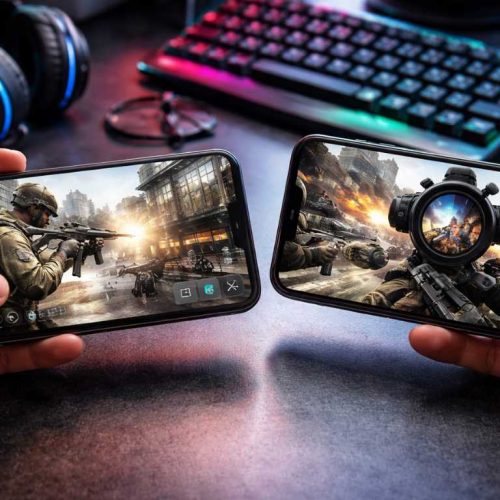
While the spotlight often shines on high-stakes online arenas, the true test of a gamer’s discipline frequently lies in the solitary world of offline play. Many assume that without the pressure of live opponents, there is less incentive to hone one’s abilities. However, achieving offline games skill improvement offers a unique, controlled environment for personal growth, deep strategic thinking, and genuine technical development. Whether you are dismantling a complex AI, navigating intricate environmental puzzles, or perfecting a high-speed run, the path to mastery requires more than just time—it requires intent. This guide provides the framework to transform your approach, moving you from casual play to a higher standard of technical execution. By focusing on tips and tricks designed for the solo experience, you can improve offline game skills across any genre, from RPGs to fast-paced action titles.
The Foundation of Mastery: System Comprehension
To conquer a game, you must first deconstruct its architecture. Mastery goes beyond basic control familiarity; it requires a deep dive into the underlying logic that governs the experience. Understanding the internal systems is the bedrock of any meaningful effort toward offline games skill improvement.
Deconstructing Mechanics and Systems
Every title, from minimalist puzzles to sprawling role-playing games, operates on a specific set of rules. To improve, you must identify and analyze these components:
- Core Gameplay Loop: Identify the primary cycle of action. Is it a loop of exploration, collection, and crafting, or a sequence of combat and character progression? Understanding this cycle allows you to optimize every movement within it.
- Resource Management: Study how the game handles health, stamina, currency, and items. Skilled players distinguish themselves by how efficiently they conserve and deploy these limited assets.
- Combat Dynamics: Move beyond uncoordinated inputs. Analyze hitboxes, damage variables, enemy behavior patterns, and counter-mechanics. Learning the rhythm of an encounter is far more effective than relying on reflexes alone.
- Progression Paths: Determine how the game rewards growth. Whether through experience points, gear upgrades, or hidden techniques, knowing the most efficient path to power is essential for high-level play.
Take the time to experiment with the environment. Use tutorials as a starting point, but spend time testing the boundaries of the game’s logic to see how it responds to different strategies. This experimental phase is where you find the most valuable tricks to bypass difficult obstacles.
Identifying Weaknesses Through Self-Diagnostics
Honest self-assessment is the fastest way to bridge the gap between your current skill level and your goals. Everyone has blind spots, and identifying them is a prerequisite for progress. If you want to improve offline game skills, you must become your own harshest critic and most observant coach.
Recording and Reviewing Play: If your platform allows, record your sessions. Watching your performance from a detached perspective reveals habits, errors, and missed opportunities that are often invisible during active play. You may notice that you consistently fail to dodge in a specific direction or that you ignore vital UI elements during intense moments.
Isolating Challenges: Identify specific pain points. Are you struggling with a particular boss, a certain type of logic puzzle, or spatial awareness in open worlds? Pinpoint the exact moment your strategy fails. By isolating these moments, you can create targeted practice routines rather than replaying large sections of the game inefficiently.
Movement and Precision: Evaluate your positioning. Are you taking unnecessary damage due to poor timing? Is your platforming imprecise? Tightening your physical control over the character is often the simplest way to see immediate results. High-level play often comes down to pixel-perfect positioning and frame-accurate inputs.
Decision-Making Under Pressure: Assess your cognitive load. Do you rush into encounters without a plan, or do you struggle to adapt when a situation shifts? Understanding your mental hurdles is just as important as mastering the controls. Strategic tips often involve slowing down the pace of your own decision-making to match the game’s internal clock.
Strategic Practice and Deliberate Play for Offline Games Skill Improvement
Spending hundreds of hours in a game does not guarantee improvement if that time is spent aimlessly. To see real growth, you must engage in deliberate practice—focused, intentional effort aimed at specific goals. This is the cornerstone of offline games skill improvement.
The Principles of Deliberate Practice
Deliberate practice is the opposite of mindless repetition. It involves a structured approach to skill acquisition:
- Set Micro-Goals: Move away from broad goals like “getting better.” Instead, focus on specific targets, such as mastering a perfect parry, completing a level without using healing items, or achieving a specific accuracy percentage.
- Single-Skill Focus: Do not attempt to fix everything at once. Dedicate specific sessions to mastering one element, such as movement speed, resource conservation, or enemy pattern recognition. This focused approach accelerates muscle memory development.
- Incremental Difficulty: Once a skill becomes comfortable, increase the challenge. Use higher difficulty settings or self-imposed handicaps to ensure you stay at the edge of your comfort zone. If the game feels easy, you are likely no longer improving.
By applying these tricks to your practice sessions, you transform the game into a training ground. This disciplined mindset distinguishes the casual enthusiast from the expert player.
Consistency and the Long-Term View
True mastery is a marathon. It requires a patient, consistent approach to development. To improve offline game skills, you must treat your gaming time as a developmental process rather than just a leisure activity.
Frequent, Short Sessions: Short bursts of focused practice (30 to 60 minutes) are generally more effective for building muscle memory than infrequent marathon sessions. Consistency helps the brain retain complex patterns and inputs. During sleep, the brain consolidates these patterns, making the next day’s session even more productive.
Reframing Failure: Treat every failure as a data point. Instead of experiencing frustration, analyze why the attempt failed and what specific adjustment is required for the next try. In offline games, deaths and failures are often the most effective teachers because they highlight the exact limits of your current strategy.
Tracking Progress: Maintain a mental or physical log of your achievements. Recognizing small improvements provides the motivation necessary to tackle the game’s most daunting challenges. Whether it is a faster completion time or a more efficient use of resources, every small win contributes to the larger goal of offline games skill improvement.
Advanced Techniques for High-Level Execution
As you move past the fundamentals, you can begin to apply more nuanced strategies to gain a decisive edge. These advanced tips are what allow players to tackle legendary difficulty modes and speedrun challenges.
Pattern Recognition and Anticipation
Most offline games rely on predictable AI and environmental scripts. Learning to identify these sequences allows you to transition from reacting to the game to anticipating it. This shift reduces your mental strain and allows for more creative problem-solving. Look for “tells”—subtle visual or auditory cues that indicate an enemy is about to launch a specific attack. Mastering this trick makes even the fastest combat systems feel manageable.
Precision and Input Optimization
Your connection to the game is through your controller or keyboard. Ensuring this connection is as efficient as possible is vital.
- Muscle Memory: Practice difficult sequences until they become automatic. When your fingers move without conscious thought, your mind is free to focus on higher-level strategy. This is essential for genres like character action games or traditional platformers.
- Setting Optimization: Do not overlook the importance of your interface. Adjusting sensitivity, button layouts, or visual settings can remove physical barriers to better performance. Many experts improve offline game skills simply by finding a control scheme that matches their natural hand movements.
- Frame Data Awareness: In technical games, understanding the “startup,” “active,” and “recovery” frames of your actions can change how you approach every interaction. This level of depth is common in fighting games but applies to many modern action-RPGs as well.
Learning from the Expert Community
Even in a single-player environment, you are not alone. The broader gaming community is a repository of collective knowledge. Reviewing high-level play, such as speedruns or no-hit challenges, can reveal hidden mechanics and creative tricks that you might never discover on your own. Platforms like YouTube and specialized forums offer a wealth of tips that can shave hours off your learning curve.
Genre-Specific Strategies for Mastery
The path to offline games skill improvement varies depending on the genre you are tackling. Applying a one-size-fits-all strategy is rarely effective.
Action and Soulslike Games
In these genres, timing and patience are paramount. The most important tip is to prioritize survival over damage. Learn the defensive windows—parries, dodges, and blocks—before focusing on offensive combos. Observe the terrain; often, the environment can be used as a shield or a weapon against superior numbers.
Role-Playing Games (RPGs)
In RPGs, offline games skill improvement is often found in the menu screens as much as the battlefield. Deeply understanding stat scaling, elemental weaknesses, and synergy between party members is essential. A common trick is to “break” the game’s economy or crafting system early to ensure you are always ahead of the power curve.
First-Person Shooters (FPS)
Improving your aim is only half the battle. Spatial awareness and movement are equally critical. Use “cover-peeking” and “circle-strafing” to minimize your profile while maximizing your output. Understanding AI pathfinding allows you to manipulate enemies into choke points, turning a chaotic shootout into a controlled execution.
The Psychological Edge: Focus and Resilience
Gaming skill is as much a mental exercise as a physical one. Maintaining a sharp, resilient mindset is essential for sustained offline games skill improvement.
Cultivating Deep Focus: Minimize external distractions. Create an environment that allows you to be fully present in the game, as even a split second of diverted attention can lead to avoidable errors. Turn off notifications and ensure your physical space is comfortable.
Managing Frustration: When you hit a plateau, take a break. Stepping away for a few hours allows your brain to process what you have learned and often leads to a breakthrough upon your return. Frustration leads to “tilt,” which causes sloppy play and reinforces bad habits. Emotional regulation is a key tip for any high-level player.
Maintaining the Joy of Discovery: Remember that the primary purpose of gaming is engagement. Balance your rigorous practice with sessions of pure play. Enjoying the process ensures that you remain motivated to continue your journey toward mastery. The most effective way to improve offline game skills is to remain genuinely curious about the game’s world and mechanics.
Frequently Asked Questions
How can I improve my reaction time in fast-paced single-player games?
Improving reaction time is best achieved through a combination of pattern recognition and physical optimization. By learning to anticipate enemy movements, you reduce the need for raw reflex. Additionally, ensuring your hardware is optimized for low latency and high refresh rates can provide a slight but meaningful edge. Consistent practice builds the neural pathways necessary for faster responses.
Is it possible to reach an expert level without online competition?
Absolutely. The metric for success in offline gaming is your ability to master the game’s systems and overcome its most difficult programmed challenges. Many of the most technically proficient gamers in the world focus exclusively on solo challenges like speedrunning or maximum-difficulty playthroughs. The discipline required for offline games skill improvement is highly respected in the community.
What is the single most important factor for improvement?
The most critical factor is the transition from passive play to active learning. When you play with the specific intent to analyze, adjust, and improve, your skill level will rise far more rapidly than through repetition alone. Using structured tips and tricks turns every session into a learning opportunity.
How does hardware impact my ability to improve?
While skill is primarily internal, hardware can act as a ceiling. A high-quality monitor with low input lag and a responsive controller or mouse can make your inputs feel more direct. However, hardware is no substitute for deliberate practice and system comprehension.
Conclusion
The pursuit of mastery in the solo arena is a deeply rewarding endeavor. By adopting a structured approach—understanding the mechanics, practicing with intent, and maintaining mental discipline—you can significantly improve offline game skills and elevate your gameplay to professional standards. Every defeated boss and solved puzzle is a milestone in your personal development. Whether you are seeking new tips for a specific level or advanced tricks to master a complex system, the journey of offline games skill improvement is one of constant growth and discovery. Embrace the process, stay patient, and you will find that the skills you build in the solo arena will provide a profound sense of accomplishment and a lifetime of improved gaming experiences.