Mobile gaming has undergone a massive transformation, moving beyond simple puzzles to offer deep, console-quality adventures that rival traditional gaming systems. While touchscreens are convenient for a quick session during a commute, serious players often find themselves limited by the lack of tactile feedback and the physical obstructions of their own fingers. This is where mastering iOS Games Controller Tips becomes essential, bridging the gap between a smartphone and a high-end console. By understanding the nuances of controller support and mastering a few technical strategies, you can completely redefine how you play on an iPhone or iPad. This comprehensive guide provides the essential knowledge needed to choose the right hardware, optimize your settings, and gain a competitive edge in any digital environment.
Whether you are tackling the latest open-world RPG or competing in a high-stakes battle royale, the implementation of a physical interface changes everything. With the advancement of Apple’s silicon, including the M-series chips in iPads and the A-pro series in iPhones, the software is now powerful enough to demand better input methods. Throughout this article, we will explore iOS Games Controller Tips that cover everything from basic pairing to advanced latency reduction, ensuring you get the most out of your hardware investment. We will also look at controller support iOS features that many users overlook, as well as general gamepad tips to keep your gear in top shape.
Why an iOS Games Controller is a Game-Changer
For years, mobile gaming was strictly defined by touch controls. While intuitive for some casual genres, they often fall short during high-stakes action or complex RPGs where precision is paramount. The introduction of robust system-wide controller support iOS has changed the landscape entirely. A physical controller offers the precision and ergonomic comfort that glass screens simply cannot replicate, allowing for a level of immersion previously reserved for home consoles.
Precision and Accuracy: Analog sticks and physical buttons offer significantly more control than swiping on glass. This is vital for aiming in shooters or executing frame-perfect combos in fighting games. The tactile “click” of a button provides immediate feedback to the brain, reducing the cognitive load of constantly checking where your thumbs are positioned on the screen.
Ergonomics and Comfort: Long gaming sessions are much easier on the hands when using a dedicated grip. This reduces cramping and prevents the screen from becoming obscured by fingerprints and sweat. Furthermore, holding a controller allows for a more natural posture, which can prevent neck and wrist strain over hours of play.
Immersive Experience: Removing your hands from the display allows you to see the full art and interface of the game. Modern mobile titles feature stunning graphics and complex HUDs (Heads-Up Displays); using a controller ensures that 100% of that screen real estate is dedicated to the visual experience rather than being covered by your thumbs.
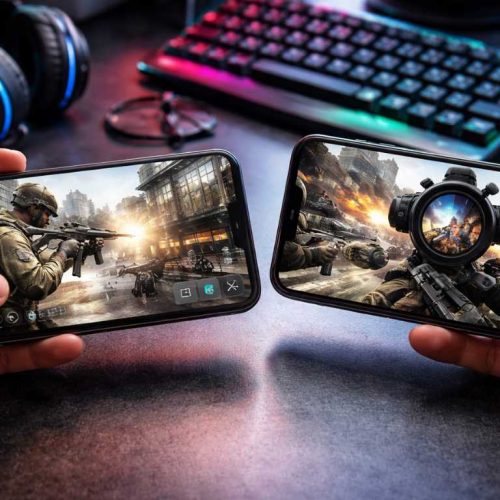
Competitive Edge: In multiplayer environments, those using controllers typically react faster and move more fluidly than touch-based opponents. This is particularly evident in games like Call of Duty: Mobile or Apex Legends, where movement and aiming must happen simultaneously.
Choosing Your Perfect Companion: Best Controllers for iOS
The market for compatible controllers is diverse, ranging from pocket-sized attachments to full-sized console gamepads. Your choice should depend on your specific playstyle and whether you prioritize portability or familiar comfort. When searching for gamepad tips, the first step is always identifying the hardware that fits your hand size and device type.
MFi Certified Controllers
Made For iPhone (MFi) controllers are built specifically for the Apple ecosystem. They are guaranteed to work across the operating system and often feature integrated phone mounts or specialized Lightning/USB-C connectors.
Backbone One: This controller snaps onto the sides of your iPhone, turning it into a handheld console similar to a Nintendo Switch. It is widely praised for its low latency because it connects directly via the port rather than Bluetooth. It also features a dedicated button to launch its own software hub, which organizes all your controller-compatible games in one place.
SteelSeries Nimbus Plus: This follows a traditional console layout and connects via Bluetooth. It is known for its incredible 50-hour battery life and comfortable, sturdy build. It also includes a detachable iPhone mount, making it a great versatile choice for both iPad and iPhone users.
Razer Kishi V2: Much like the Backbone, the Kishi offers a wrap-around design. It features micro-switch buttons that provide a clicky, responsive feel, which is highly sought after by competitive gamers. Its extendable bridge ensures it fits various iPhone models, even with some slim cases.
Console Controllers: The Versatile Option
If you already own a home console, you likely already have a world-class iOS controller. Apple has worked closely with Sony and Microsoft to ensure their hardware works seamlessly with controller support iOS protocols.
PlayStation DualSense and DualShock 4: These are excellent for those who prefer the symmetrical stick layout. Interestingly, the DualSense even supports advanced haptics and adaptive triggers in certain native iOS titles and via PS Remote Play, offering a premium feel that mobile-specific controllers sometimes lack.
Xbox Wireless Controller: These are highly regarded for their offset sticks and industry-standard ergonomics. Since the Xbox controller uses a standard Bluetooth protocol (on newer models), it is incredibly stable when paired with an iPad or Apple TV.
Nintendo Switch Pro Controller: A solid option for those who prefer Nintendo’s specific button feel. While it was not supported for a long time, recent iOS updates have finally brought this fan-favorite into the fold.
Advanced iOS Games Controller Tips for Pro Players
Simply connecting a controller is the first step, but true mastery involves optimization. To get the most out of your setup, follow these iOS Games Controller Tips designed to minimize distractions and maximize performance.
Optimize Your Device Environment
Gaming is resource-intensive, and your iPhone is constantly trying to balance background tasks. To ensure the smoothest experience, disable notifications by using a dedicated Gaming Focus Mode. This prevents pop-ups from interrupting your view or causing a momentary dip in frame rates during critical moments. Go to Settings > Focus and create a “Gaming” profile that activates automatically when a controller is connected.
Additionally, closing unnecessary background apps can free up RAM. While iOS is efficient at memory management, heavy games like Genshin Impact benefit from having as much available resources as possible. This helps maintain a high frame rate and reduces potential input lag, which is a common complaint among mobile gamers.
Leverage System-Level Customization
Many users do not realize that iOS allows for deep customization of controller inputs at the OS level. Navigate to Settings > General > Game Controller. Here, you can create multiple profiles for different games. If a game doesn’t allow you to remap buttons internally, you can force the change here. You can even adjust the intensity of haptic feedback or disable the “Share” button if you find yourself accidentally taking screenshots during intense gameplay.
The Secret of Wired Connections
One of the most important gamepad tips involves reducing latency. While Bluetooth has improved significantly, it still introduces a few milliseconds of delay. For professional-level play, using a wired controller (like the Backbone One or a USB-C to Xbox cable) provides a direct line of communication to the processor. This “zero-lag” experience is crucial in fast-paced rhythm games or competitive shooters where every millisecond counts.
Seamless Connection: Setting Up Controller Support
Setting up a controller on iOS is a user-friendly process, but there are a few nuances to be aware of. Apple has streamlined the pairing sequence to ensure you can get into the action quickly, but firmware remains a common hurdle.
Pairing Your Bluetooth Controller
- Ensure your controller is fully charged, as low power can interfere with the Bluetooth radio strength and initial pairing handshake.
- Put the controller into pairing mode. For PlayStation, hold the PS and Share buttons until the light bar flashes. For Xbox, hold the small sync button on the top edge until the Xbox logo blinks rapidly.
- Open the Settings app on your iPhone or iPad and go to the Bluetooth menu.
- Look for the controller name under the list of available devices (it will usually appear as “Xbox Wireless Controller” or “DualSense Wireless Controller”) and tap it to connect.
- Once the light on the controller stops flashing and remains steady, the connection is established.
Firmware Updates: The Often Forgotten Step
If your controller is acting erratically or certain buttons aren’t registering, it likely needs a firmware update. Most controller support iOS issues stem from outdated hardware software. For Xbox controllers, you can update them via an Xbox console or the Xbox Accessories app on a PC. For PlayStation controllers, Sony offers a firmware updater for Windows. MFi controllers usually have a dedicated app on the App Store (like the Backbone app) that handles these updates seamlessly.
Exploring the Best Games with Controller Support
Not every game on the App Store works with a gamepad. However, the list of supported titles is growing daily, including massive AAA ports. When looking for new titles, look for the “Controller Supported” badge on the App Store product page.
Action and Adventure: Games like Genshin Impact, Oceanhorn 2, and Death Stranding (on iPhone 15 Pro and later) are significantly improved with a controller. These games require constant camera movement and precise combat inputs that are cumbersome on a touchscreen. The analog sticks allow for slow walking or full sprinting, adding a layer of control that touch sliders cannot match.
Racing: Titles like GRID Autosport, Real Racing 3, and Asphalt 9 benefit from the granular throttle and steering control provided by analog triggers and sticks. Using a controller allows you to feather the brakes or make slight steering adjustments, which is the difference between hitting the apex and spinning out.
Competitive Shooters: Call of Duty: Mobile and PUBG Mobile offer a console-like experience when paired with a gamepad. These games often place controller users in separate lobbies to maintain fairness, but the experience is far more satisfying and allows for complex maneuvers like “slide-canceling” or “drop-shotting” with ease.
Indie Classics and Platformers: Dead Cells, Hollow Knight (via various means), and Stardew Valley feel right at home with a controller. In platformers specifically, the physical feedback of a jump button is essential for timing difficult leaps.
Cloud Gaming: Transforming Your iPhone into a Portable Console
One of the best iOS Games Controller Tips involves looking beyond the App Store. Services like Xbox Cloud Gaming (Game Pass), NVIDIA GeForce Now, and Amazon Luna allow you to stream full PC and console games to your iPhone. These services are essentially unusable with touch controls due to the complexity of the games, but with a controller, they turn your phone into a portable powerhouse. Because the games are processed on remote servers, having a high-quality gamepad ensures that your local inputs are sent as quickly as possible, compensating for any network-related latency.
Troubleshooting Common Issues
Even with the best hardware, you may occasionally run into technical glitches. Here is how to handle the most common frustrations.
Input Lag: If you experience a delay between pressing a button and the action happening on screen, first check for environmental interference. Other Bluetooth devices or 2.4GHz Wi-Fi routers can cause signal congestion. Moving closer to your device or switching to a 5GHz Wi-Fi band often solves this. Also, ensure your device isn’t in “Low Power Mode,” as this can throttle the CPU and affect input processing.
Unresponsive Buttons: If the controller is connected but certain buttons don’t work, check the iOS Accessibility menu. Go to Settings > Accessibility > Controllers and ensure that “Customise Controls” isn’t accidentally remapping your buttons to nothing. Also, verify that the game itself supports controllers; some games only support controllers during gameplay and require touch for menu navigation.
Connection Drops: This is often a sign of a dying battery or a hardware conflict. If the controller keeps disconnecting, “Forget” the device in your Bluetooth settings and perform a hard reset on the controller (usually via a small pinhole on the back) before re-pairing.
Maintaining Your Controller for Longevity
To keep your gamepad tips practical, we must discuss maintenance. Mobile gaming often means taking your controller on the go, which exposes it to dust and debris.
Analog Stick Drift: This is a common issue where the controller registers movement even when you aren’t touching the sticks. To prevent this, store your controller in a hard shell case when traveling. If drift occurs, a small amount of electronic contact cleaner applied to the base of the stick can often clear out the dust causing the issue.
Cleaning: Use a 70% isopropyl alcohol wipe to clean the grips and buttons. Avoid getting moisture into the charging port. Keeping the controller clean prevents “sticky buttons,” which can ruin a competitive match.
Frequently Asked Questions
Do all iOS games support controllers?
No. While many high-profile games do, some titles remain touch-only. Check the App Store listing for the Game Controller icon to verify support. Generally, if a game is also available on consoles, it will likely have controller support iOS built-in.
Can I use my existing console controller?
Yes, provided it is a Bluetooth-enabled model. Most Xbox One (Model 1708 or later), Series X/S, and PlayStation 4 or 5 controllers work perfectly with current versions of iOS.
Is there a difference between MFi and standard Bluetooth controllers?
MFi controllers are specifically certified by Apple to meet their performance standards, but modern console controllers function just as well due to the native support baked into the operating system. The main difference is often the physical design (like the wrap-around style of the Backbone).
Does using a controller drain my iPhone battery faster?
Bluetooth controllers have a negligible impact on battery life. However, controllers that plug directly into the port (like the Kishi or Backbone) may draw a small amount of power from the phone. To counter this, many of these controllers feature “pass-through charging,” allowing you to plug a charging cable into the controller to charge your phone while you play.
Conclusion
Investing in a quality setup and learning these iOS Games Controller Tips is the single best way to upgrade your mobile gaming experience. It transforms your device from a casual distraction into a powerful gaming machine capable of handling the most demanding titles. By choosing the right gear, properly configuring your system settings, and practicing with a physical layout, you will find a level of precision and enjoyment that touch controls simply cannot provide. Whether you are exploring vast open worlds, racing high-performance cars, or competing in fast-paced shooters, the right controller ensures you are playing at your absolute best. Remember that the combination of controller support iOS features and the right gamepad tips can make your iPhone the only gaming console you ever truly need on the go.