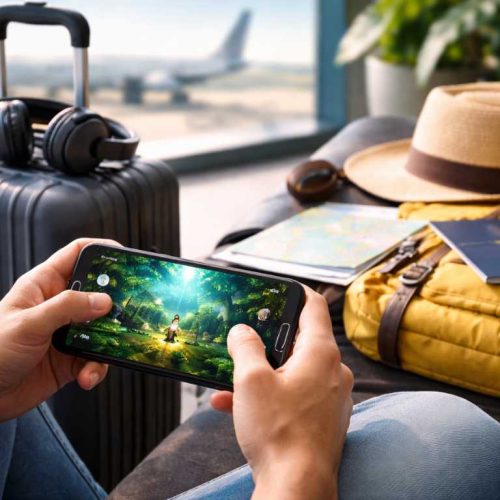
High-stakes mobile gaming requires more than just skill; it requires a device that can keep pace with your reflexes. There is nothing quite as disruptive as a frame rate drop or a sudden freeze just as you are about to secure a victory. If you have noticed your device struggling to maintain a smooth experience, you are not alone. Learning how to speed up Android games is a priority for millions of players globally who want to eliminate stuttering and latency. This guide provides a comprehensive roadmap to optimizing your Android device, ranging from simple maintenance to advanced system tweaks, to ensure your gameplay remains fluid and responsive. By implementing a consistent android lag fix strategy, you can transform a stuttering mess into a professional-grade gaming environment.
Understanding the Causes of Performance Lag
To effectively resolve performance issues, it is essential to identify why they occur. Mobile gaming is a resource-intensive task that pushes hardware to its limits. Unlike basic web browsing or social media scrolling, gaming requires the simultaneous coordination of the Central Processing Unit (CPU), the Graphics Processing Unit (GPU), and the Random Access Memory (RAM). Several factors typically contribute to a sluggish experience:
Insufficient Memory: Games rely heavily on RAM to store active data that needs to be accessed quickly. If too many applications are active in the background, the system cannot allocate enough resources to your game. When the RAM is saturated, the Android operating system may start “swapping” data to the slower internal storage, which causes significant stuttering.
Hardware Limitations: Mobile technology moves fast. Older processors or graphics chips may struggle with the demanding requirements of modern, high-fidelity titles. Games like Genshin Impact or Call of Duty: Mobile require significant performance boost capabilities that older chipsets simply cannot provide without substantial setting adjustments.
Storage Constraints: When internal storage is nearly full, the operating system struggles to manage temporary files and swap data. This leads to a general system slowdown because the Android file system requires a certain amount of “breathing room” to move data blocks around efficiently. A device with 99 percent storage filled will always perform worse than one with 20 percent free space.
Connectivity Issues: In multiplayer environments, high latency or a fluctuating signal can mimic hardware lag. This is often referred to as “ping spikes.” Even if your phone is the fastest on the market, a poor connection will make the game feel unresponsive and “jittery,” making faster gaming nearly impossible to achieve in a competitive setting.
Thermal Throttling: High-end gaming generates significant heat. To protect the hardware from permanent damage, your phone may automatically reduce its clock speed—a process known as thermal throttling. This results in a noticeable performance dip after 15 to 20 minutes of intense play, as the device tries to cool itself down by working less hard.
Immediate Solutions for Smoother Gameplay
If you need a quick boost before your next session, these initial steps can provide immediate relief by freeing up system resources. These are the “low-hanging fruit” of optimization that every gamer should perform regularly.
Close Unnecessary Background Applications
Every open app consumes a portion of your CPU and RAM. Even if you aren’t actively using an app, it might be syncing data or checking for notifications in the background. Before launching a demanding title, use the recent apps switcher to close everything else. This ensures that your game has exclusive access to the device’s processing power. For a more aggressive android lag fix, you can go into Settings > Apps and “Force Stop” apps that are known resource hogs, such as social media platforms or navigation tools.
Clear the System Cache
Apps and games store temporary data to speed up loading times, but these files can become cluttered or corrupted over time. Navigating to your settings and clearing the cache for specific games can often resolve stability issues without affecting your saved progress. To do this, go to Settings, then Apps, select your game, and choose the option to clear cache under the storage menu. Note that you should clear the “Cache,” not the “Data,” as clearing data will delete your login info and local save files.
Perform a System Restart
It is a simple step that is often overlooked. Restarting your device flushes the memory and terminates any runaway background processes that might be invisible to the user. A fresh boot clears out the “cobwebs” of the operating system and is often the easiest way to restore a device to its optimal operating state for faster gaming.
How to Speed Up Android Games: Advanced System Tweaks
For users looking to extract every bit of power from their hardware, deeper settings can be adjusted within the Android operating system. These tweaks require entering a hidden menu but offer the most significant performance boost available without rooting the device.
Unlock Developer Options
Android contains a hidden menu designed for programmers that offers several performance-related toggles. To access this, go to Settings, select “About Phone,” and tap the “Build Number” seven times. A notification will appear saying “You are now a developer.” Once enabled, you will find Developer Options in your System or General Management menu.
Force 4x MSAA: This setting forces the device to use multi-sample anti-aliasing. While it makes graphics look significantly smoother by removing jagged edges, it is extremely taxing on the GPU. Enable this only if you have a modern flagship device and want the best visuals. Conversely, if you are experiencing lag, ensure this is turned OFF to save resources.
Adjust Animation Scales: Locate the Window Animation Scale, Transition Animation Scale, and Animator Duration Scale. Reducing these from 1x to 0.5x (or turning them off entirely) makes the entire interface feel much faster. While this doesn’t technically increase the FPS of the game, it reduces the delay when switching between the home screen and your game, contributing to an overall sense of a faster gaming experience.
Limit Background Processes: You can manually restrict the number of apps allowed to run in the background. Setting this to “No background processes” or “At most 2 processes” ensures the CPU remains focused entirely on your active game. This is a powerful android lag fix for devices with limited RAM.
Disable HW Overlays: Enabling this option forces the system to use the GPU for screen compositing. While this can sometimes use more battery, it can offload work from the CPU, potentially increasing the frame rate in certain 2D and 3D applications.
Fine-Tune In-Game Graphics
Most high-end games include their own internal settings menus. It is a common mistake to leave these at “Auto” or “High.” If your hardware is struggling, lowering the resolution or reducing shadow quality can result in a much higher and more stable frame rate. It is often better to have a smooth 60 frames per second at lower settings than a stuttering 30 frames per second at high settings.
Key settings to adjust for a performance boost include:
- Shadow Quality: Shadows are computationally expensive. Turning them to Low or Off can drastically increase FPS.
- Anti-Aliasing: Turning this off will make edges look “jagged” but will significantly reduce the load on the GPU.
- Draw Distance: Reducing how far the game renders objects helps the CPU manage the game world more effectively.
- Particle Effects: Lowering effects like smoke, fire, and explosions will prevent frame drops during intense combat sequences.
Hardware and Environmental Maintenance
Software is only half of the equation. Physical maintenance and storage management are equally vital for a consistent experience. If the hardware cannot breathe or the disk is clogged, no amount of software tweaking will help.
Manage Internal Storage
An overloaded hard drive is a slow hard drive. Ensure you have at least 15 percent of your total storage space free. Modern Android devices use UFS (Universal Flash Storage), which requires free blocks to perform wear leveling and background garbage collection. Deleting old videos, unused apps, or large downloads allows the system to manage its file structure more efficiently, which directly impacts game load times and stability. This is a fundamental android lag fix that many users ignore.
Monitor Device Temperature
Heat is the enemy of performance. If your phone feels hot to the touch, it is likely throttling its performance to cool down. To maintain high speeds:
- Take breaks between long sessions to let the hardware cool.
- Remove bulky protective cases that might trap heat against the phone’s body.
- Avoid gaming while the device is fast-charging, as the battery charging process generates significant internal heat.
- Play in a cool environment; gaming in direct sunlight will trigger thermal throttling almost immediately.
Optimize Your Network for Online Play
For competitive online games, your connection speed is just as important as your hardware. A high-performance phone cannot compensate for a “laggy” server connection. Achieving faster gaming in titles like PUBG or Mobile Legends requires a stable network path.
Prioritize Wi-Fi over Mobile Data: A stable 5GHz Wi-Fi connection is almost always superior to cellular data for gaming. 5GHz bands offer more bandwidth and less interference than the older 2.4GHz bands. While 4G or 5G might offer high download speeds, they often suffer from higher “jitter” (fluctuations in ping), which causes character jumping or “rubber-banding” in games.
Reduce Network Congestion: If other people on your network are streaming 4K video or downloading large files, your game performance will suffer. Ensure your gaming device has priority by using Quality of Service (QoS) settings on your router, or simply play when network demand in the household is lower.
Use Native Game Boosters
Many modern manufacturers like Samsung, Xiaomi, and OnePlus include built-in “Game Mode” or “Game Turbo” software. These tools are specifically designed to provide a performance boost by automating many of the steps mentioned above. They can block notifications, lock the brightness level, and prioritize network data for the game. Always ensure these features are activated, as they often include specialized drivers and kernels tweaks that are not accessible through standard settings.
Conclusion
Achieving a high-performance gaming experience on Android is a matter of balancing system resources and hardware health. By understanding how to speed up Android games, you take control of your device’s capabilities rather than being at the mercy of default settings. By managing your background tasks, optimizing system settings through developer options, and keeping your storage lean, you can significantly reduce lag and enjoy a more immersive experience. Whether it is through a software-based android lag fix or better hardware cooling, every small adjustment contributes to a more responsive and competitive environment. With these strategies in place, your device will be better equipped to handle even the most demanding titles with ease, ensuring that your skills are the only limit to your success.